


News: Zavhy’s Desk
Achievements in the Past 12 Months Zavhy has marked significant milestones over the past year, demonstrating rapid growth and innovation: Letter of Intent for 60 Bridges (2026-2030): Secured a groundbreaking LOI with Remmits to deliver 60 3DCP bridges over five years. Grant Wins: Awarded the KIA CE Grant (€425,000) for three demonstration bridges and the […]
Read More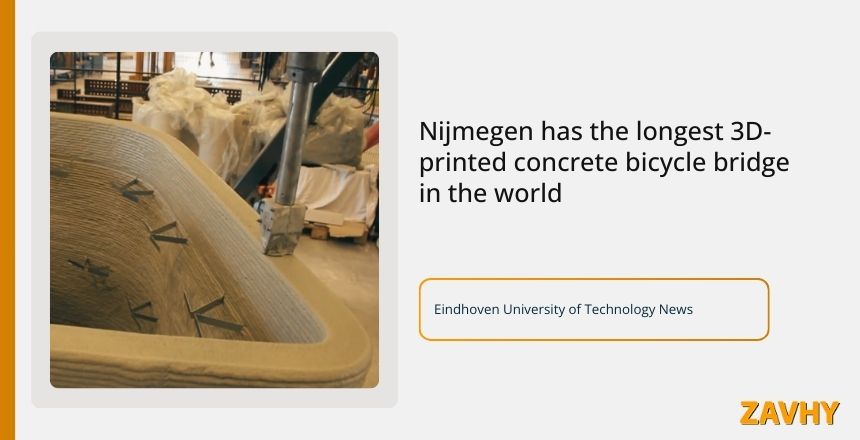
Media: Eindhoven University of Technology
Discover the world’s longest 3D-printed concrete bicycle bridge in Nijmegen, spanning 29 meters, showcasing TU/e’s innovative research and Zavhy’s groundbreaking 3D concrete printing technology for sustainable, flexible, and personalized designs.
Read More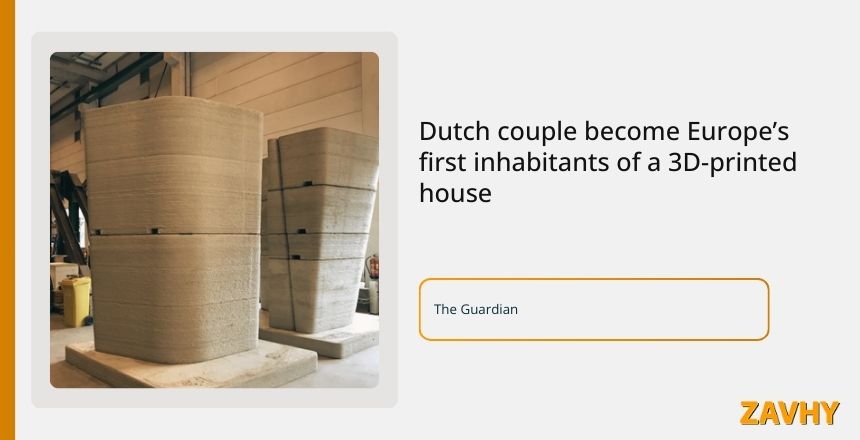
Media: The Guardian
A Dutch couple has become the first in Europe to inhabit a legally approved, fully 3D-printed house with load-bearing walls. This milestone project in Eindhoven showcases innovative 3D printing technology, enabling rapid, flexible, and sustainable construction while paving the way for affordable, customizable homes of the future. Read More
Read More
Publication: Taylor and Francis Online
Emerging technologies in construction are redefining how materials are utilized, particularly with the advancement of additive manufacturing techniques in concrete applications. This innovative approach involves the strategic incorporation of materials to enhance specific properties such as durability and insulation at precise locations within a structure. Through sophisticated printing processes, it’s now possible to infuse varying […]
Read More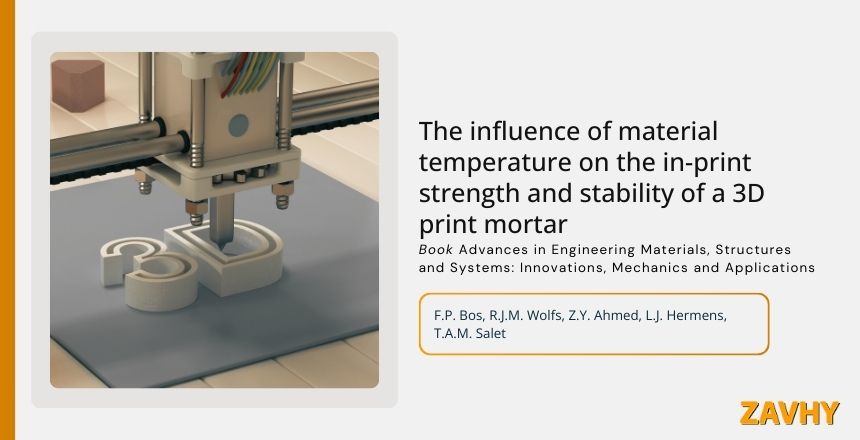
Publication: Taylor and Francis Group
The innovative realm of filament-based 3D concrete printing (3DCP) introduces new challenges, notably in “buildability”—the ability of freshly deposited concrete to support itself during construction without traditional formwork. This capability is significantly influenced by the chemical and physical properties of concrete, which evolve as the material sets. Intriguingly, the temperature at which concrete is printed […]
Read More
Publication: ResearchGate
Innovative approaches in the construction sector are leveraging new additive manufacturing techniques to enhance the automation of building processes. This advancement necessitates the creation of specialized materials tailored to meet the unique demands of these methods. Central to this development is the challenge of accurately characterizing these materials to ensure they perform optimally during the […]
Read More
Publication: ResearchGate
The inherent limitation of 3D printed concrete is its requirement to be self-supporting during the printing process, which can impose geometric constraints. Addressing this challenge, a novel methodology has been developed to print concrete onto a temporary, freeform surface. This innovative approach integrates the use of a Flexible Mould, pioneered at TU Delft, with a […]
Read More
Publication: Taylor and Francis Online
The burgeoning field of additive manufacturing in concrete is set to revolutionize the construction industry, potentially altering how buildings and infrastructures are designed and erected. Despite the successful construction of full-scale structures by various academic and industrial bodies, a significant hurdle remains: the existing codes of practice for evaluating structural integrity are not fully adapted […]
Read More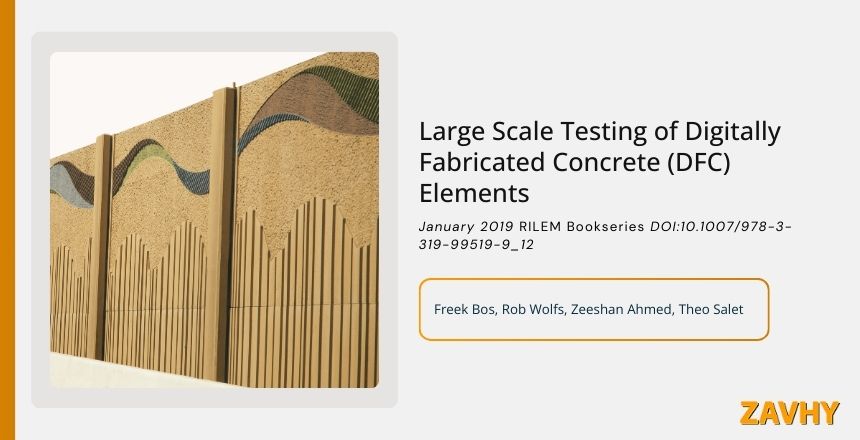
Publication: ResearchGate
Digitally Fabricated Concrete (DFC) is emerging as a prominent theme in construction, with case studies being showcased globally at an increasing rate. However, there remains a significant gap in the reporting of these projects, particularly concerning the structural requirements met and the methods used to ensure compliance. Often, the research published on DFC materials is […]
Read MoreRecent Post

News: Zavhy’s Desk
november 16, 2024
Media: Eindhoven University of Technology
september 8, 2021